

Ten thoughts on the state of OSU Wheat Variety Development
- Note: The first mention of experimental wheat line names appears in bold format.
- Note: Grain yield is reported in imperial units or bushels per acre and shortened to bu/ac.
1. From 300 to 3
What started in 2020 as several hundred inbred progenies from Breeding Cycle 1 of OSU CoAXium wheat has now been reduced to about three elite lines (Table 1). To put this into a historical context, the Wheat Improvement Team is currently creating crosses to start Breeding Cycle 7. Choosing among those three lines for commercialization will be challenging because each has its own balance of strengths and weaknesses (Table 1), and there are many more coming.
| Name | Pedigree | Release timeline | Positioning | First weakness |
|---|---|---|---|---|
| OK23D89031X | Incline AX (AD)/2*OK12621 | 2026 | Dual-purpose | Shattering |
| OK23D89055X | LCH15ACC-16-25 (AB)/OK188608//Smith's Gold | 2026 | Late planted | Straw strength |
| OK23D89076X | LCH15ACC-16-25 (AB)/OK188608//OK12D22004-016 | 2026 | Late planted | Leaf rust susceptibility |
| OK23D89088X | LCH15ACC-16-25 (AB)/OK188608//Uncharted | 2027 | Dual-purpose, grain-only | Stripe rust susceptibility |
| OK249A26X | Incline AX (AD)/2*OK12621 | 2027 | Dual-purpose, grain-only | None currently |
At this time, the team is inclined to recommend OK23D89031X (dual-purpose) and OK23D89055X (grain-only, late planted), although OK23D89076X offers substantial improvement in quality but with an increased risk of herbicide sensitivity. One last round of quality testing and a thorough review of the agronomic data is needed. Stay tuned, as the release documentation will be prepared when the commercialization agreement between the licensee and the trait owner is signed. The CoAXium genetics chest is full, with two more advanced lines now under breeder-seed increase by the Oklahoma Foundation Seed Stocks – OK23D89088X and OK249A26X.
We observed three areas that needed immediate improvement in the first few breeding cycles of OSU CoAXium: disease resistance, end-use quality and acid-soil tolerance. The trait donors OSU received in the last decade were second-rate in all three areas, but this will be fixed.
2. Smith’s Gold and a Treasure Trove
The OSU wheat variety development pipeline (VDP) remains loaded with general-purpose, hard red winter (HRW) elite lines featuring very high yield potential. Over 100 experimental lines populated this part of the VDP in 2025. Of those, three are featured in Table 2 for their seniority and long-term performance. All three are direct descendants of Smith’s Gold.
| Name | Pedigree | Best | Stripe rust | Leaf rust | Straw strenth | Bread baking quality |
|---|---|---|---|---|---|---|
| OK20708 | FDL Miranda/Smith’s Gold | Northern OK | Moderate resistance | Intermediate resistance | Superior | Inconsistent |
| OK21DTR1705-91 | Green Hammer/Smith's Gold | Central corridor | Moderate resistance | Strong resistance | Good | Excellent |
| OK21611 | TX09D1172/Smith's Gold sib | Downstate OK | Resistant | Resistant | Good | Intermediate |
Release documentation for OK20708 is expected to be prepared in early 2026. It has demonstrated superior yield competitiveness in the 2024 and 2025 OSU wheat variety trials (WVTs), particularly under intensive management at Lahoma (Table 3). At elevated yield levels (>90 bu/ac), OK20708 exhibits moderate height and excellent standability, comparable to, if not superior to, High Cotton. OK20708 may be adopted statewide, but its primary area of adaptation lies within the central corridor of Oklahoma, particularly in the northern half of the state.
| Entry | 2-yr yield, bu/ac | 2025 Test wt., lb/bu |
|---|---|---|
| OK20708 | 92 | 58.8 |
| LCS Helix AX | 88 | 58.4 |
| Showdown | 86 | 58.6 |
| Strac C++ | 83 | 58.9 |
| KS Providence | 82 | 56.6 |
| High Cotton | 81 | 59.4 |
| OK Corral | 79 | 57.0 |
| Orange Blossom CL Plus | 77 | 60.7 |
Note: The top LSD group contains OK20708, LCS Helix AX and Showdown.
One year behind OK20708 is OK21DTR1705-91, a progeny of Smith’s Gold x Green Hammer. It is also best fit for the central corridor, particularly southwest OK, and features excellent acid-soil tolerance and all-season resistance to leaf rust. OK21DTR1705-91 exceeds OK20708 in milling and baking quality and probably deserves the GoldnGrain® trademark.
While the Wheat Improvement Team’s attention for the next general-purpose variety release remains focused on OK20708 or OK21DTR1705-91, their differences have been too great to commit to one over the other. Their comparison is reminiscent of Showdown and Green Hammer in 2018. Showdown was believed at that time to have the higher yield ceiling, whereas Green Hammer was thought to have greater plasticity in the face of disease or climatic stress. WVT survey indicates growers have chosen Green Hammer over Showdown, although Showdown has clearly outperformed Green Hammer in the WVTs.
A brief note about OK21611 is warranted here, because this elite line is relatively new to the candidate list but is the most intriguing for yield. Both parents were known for their superior yielding ability and yield stability in Texas and Oklahoma. TX09D1172 is a sibling of TAM 303, a variety used copiously in this program for its grazing tolerance but also carries a chaff color gene from a wild wheat relative that causes darkened bronze color in highly stressed plants. OFSS received 35 pounds of breeder seed in fall 2025 to begin foundation seed production.
3. A 1-2 Punch to Wheat Streak Mosaic and Triticum Mosaic
Approximately 40% of the current elite line pool in the OSU VDP is specifically targeted for the Oklahoma Panhandle region. This is an unusually high frequency and reflects a three-year period (2023-2025) of intense selection pressure for High Plains adaptation. The inclusion of a reliable dryland testing site at Balko in 2023, following a three-year hiatus in the region (2020-2022), made the difference in putting OSU wheat improvement back in the Panhandle.
Adaptation to the Oklahoma panhandle relies in part on the level of resistance to the wheat streak mosaic (WSM)/Triticum mosaic (TrM) disease complex. Our strategy is to offer a portfolio of genetics at multiple levels of resistance, based on repeated use of genetic markers for WSM, WSM/TrM or wheat curl mite (WCM) resistance, and field validation through contracted research at the University of Nebraska-Lincoln. This validation has been critically important because genetic markers for WSM/TrM may not always be reliable in predicting resistance.
This strategy contains three components. Wheat growers in the Oklahoma Panhandle already have the OSU-sourced option of WSM (alone) tolerance, currently available in highly adapted varieties like Showdown, OK Corral and OK20708 (release pending). However, WSM tolerance hardly enables survival in the Panhandle, where WCM infestations can be severe and where TrM is present. This form of resistance is typically only effective in downstate areas, where Triticum mosaic may not be present in some years.
Thus, a moderate WSM/TrM resistance package is needed, currently provided by the 2020 OSU release Breakthrough, which carries the Thinopyrum-derived Wsm1 gene for temperature-sensitive resistance to WSM/TrM. Pending further testing in the 2026 WVTs, the Wheat Improvement Team may release a second option in 2026-2027 via OK20D78S021 (Table 4), which carries the Wsm2 gene for temperature-sensitive resistance to WSM (but not TrM), plus the gene Cmc4, which provides partial protection to WCM/TrM. This is perhaps our best option in the moderate resistance package. Also in this moderate package is OK21PS825, which carries Wsm1 like Breakthrough and is considered an improvement over Breakthrough. All are under foundation seed production by the Foundation Seed Stocks.
Finally, our elite WSM/TrM resistance package may be serviced by one of two highly related experimental lines, OK22840 or OK22838, each carrying Wsm1 + Cmc4 (Table 4). Both are in final stages of testing and foundation seed increase and have withstood severe infections of WSM/TrM in Nebraska inoculated nurseries. Even better resistance packages are under development by the Wheat Improvement Team, though stronger sources of WSM/TrM resistance, such as the Wsm3 gene, can be yield-costly.
Tables 4a-c. Strategic deployment of various Wheat streak mosaic/Triticum mosaic (WSM/TrM) resistance packages.
| Name | Pedigree | Resistance genes present | Main weakness | Anticipated release |
|---|---|---|---|---|
| Breakthrough | Wsm1-Overley/Fuller//CO050270/3/CO050337-2 | Wsm1 | - | Released in 2020 |
| OK21PS825 | OK05312 /Breakthrough sib | Wsm1 | Small kernel | Prefer OK20D78S021 |
| OK20D78S021 | OK05312/Breakthrough sib//OK13804W | Wsm2+Cmc4 | Stripe rust protection | 2026 or 2027 |
| Name | Pedigree | Resistance genes present | Main weakness | Anticipated release |
|---|---|---|---|---|
| OK22838 | OK05312/Breakthrough sib//KS12WGGRC59 | Wsm2+Cmc4 | Shattering | 2027 |
| OK22840 | OK05312/Breakthrough sib/OK13804W | Wsm2+Cmc4 | Stripe rust protection | Prefer OK22838 |
| Name | Pedigree | Resistance genes present | Main weakness | Anticipated release |
|---|---|---|---|---|
| OK22PD67011 | KS13U6030R1/Joe//KS17WGRC62 | Wsm1+Wsm3 | Very late | Not planned yet |
| OK22PD67005 | OK12612/Joe//KS17WGRC62 | Wsm1+Wsm3 | Yield | Not planned yet |
It is WIT’s mission to provide comprehensive protection against this very serious disease complex while still providing high-yielding germplasm in the absence of the complex. To the latter mission, four Oklahoma Panhandle-adapted lines are in the final stage of breeder trials before entering the OSU WVTs and OFSS seed production, as listed below:
- OK22PD67045 Breakthrough sib/Joe//KS17WGRC62
- OK22PD67033 Breakthrough sib/Joe//KS17WGRC62
- OK22PD67025 OK12612/Joe//KS17WGRC62
- OK21DTR1717-45 Spirit Rider/Lonerider
The high yield potential, shorter stature and lodging resistance of OK21DTR1717-45 make it appealing for irrigated High Plains environments and point eastward. OK21DTR1717-45 progressed through a series of nurseries placed strictly at the Oklahoma Panhandle Research and Extension Center (Goodwell) in harvest years 2021 and 2022. Hideous results were produced at this site during both years due to unreliable and inconsistent supplemental irrigation. Selection could not be practiced, and entire nurseries were advanced en masse from year to year. Yield-worthy results were not produced until 2023, when these and other nurseries intended for the Oklahoma Panhandle were placed at Balko (dryland). Thus, our results for OK21DTR1717-45 are preliminary but highly encouraging.
4. Beyond Paradox
In 2025, the Ox line of genetics (varieties Paradox, Breadbox and Firebox) went through only its second full crop season of industry vetting and adoption. Milling demand for 2026 Ox crop wheat will be about 1.5-2.0 million bushels, mostly from Paradox and Breadbox. It appears at this point that much of the Ox wheat that is milled will be used as an ingredient flour at very low inclusion rates, i.e., <10% of the base commodity flour. Some of the strengthening agents Ox wheat flour is expected to displace are emulsifiers like sodium steroyl lactylate (SSL), dough conditioners like potassium bromate, DATEM (as the ingredient appears on all product labels) and azodicarbonamide, and the most leaned-upon additive of all, purified wheat gluten (image 1). The displacement of enzyme additives may not be relevant to Ox wheat or flour; to the contrary, certain enzymes may enhance the benefits of Ox flour, for which these interactions require further study and optimization.
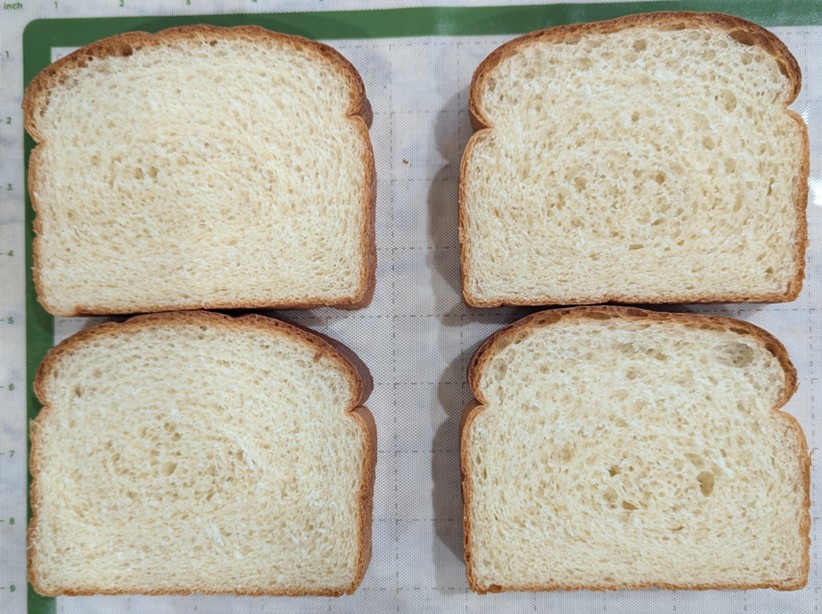
Image 1 . Left: Commercial pan bread slices produced from commodity refined white flour, using purified wheat gluten (also known as vital wheat gluten) as a dough strengthening agent. Right: Pan bread slices produced from the same commodity flour, using white flour from the HRW variety Paradox as the natural dough strengthening agent. The unprocessed Paradox flour, added as 5% of the weight of the base flour, generated a similar bread quality to vital wheat gluten at 2% of the weight of the base flour. Photo credit – Farm Strategy
To sustain this Ox program with agronomic relevance, the Wheat Improvement Team will continue to develop yield-enhanced varieties with dough functionality similar to Paradox. This is no small undertaking, because the prime protein target -- high molecular weight glutenin subunit Bx7oe – is only part of the “secret sauce.” The rest remains an enigma, but research is underway to figure it out. One such line is named OK23103024Ox with pedigree Paradox sib/Showdown sib. In the first year of elite breeding nurseries, OK23103024Ox exceeded Paradox by 10% for grain yield statewide, although some of this yield advantage was likely attributable to better wheat streak mosaic resistance compared to Paradox in 2025.
Surprising as this may seem, the more frequent use of the Paradox lineage in the OSU wheat breeding program will not be to replicate Paradox’s unprecedented dough strength but to incrementally tap into this strength to force a program-wide step change in bread dough functionality. This would entail increasing the average farinograph stability time of the entire OSU variety development pipeline program from 17 minutes to about 25 minutes, a result achievable in the next six to eight years.
The benefit would be regionally altruistic rather than program centric. A programmatic shift of this magnitude should be sufficient to produce a qualitative change in functionality of the entire Gulf Tributary HRW crop derived from the southern and central Great Plains. Such a shift will lend HRW wheat a greater competitive edge against other comparable classes from Canada, Australia, South America, Ukraine and Russia. Greater competitiveness can translate to stronger price.
Our aim is to infuse up to 15% of our crosses each year with <50% Ox genetics. Again, this is not intended to produce a Paradox-level of dough strength (>60 minutes farinograph stability) – that is a separate breeding pipeline – but to produce flour in the Bentley/Baker’s Ann level of dough strength without putting a noose around program diversity.
More can be learned from this scientific publication on Ox wheat variety development in the “Journal of Plant Registrations.”
5. A Successor to OK Corral
A legitimate beardless successor to OK Corral is yet to be found, though not due to lack of effort.
6. Throwing Trit for a Fit
Though not necessarily intended to replace OK Corral, breeding effort in the past 15 years has focused on creating a high-biomass, lodging-resistant, late-maturing beardless phenotype suitable on the one hand for silage and green chop applications (like triticale) but on the other hand worthy of seed production from a mature stand (unlike triticale). Several candidates have come and gone over the years in this program alone, never to be released for one or more significant weaknesses. If this were baseball, we would have struck out two innings straight. Finally, the experimental line OK21PS821 appears to be a legitimate hitter.
OK21PS821 comes from the cross of two awnless parents, OK11231 (a Deliver descendant) and Big Country. It started out as a 98% hard white line but was quickly reselected and converted to 100% HRW. The white or red twin version has been tested in statewide replicated breeding trials since 2021 (Images 2a-c).
Grain yield is commensurate with its delayed maturity, which is driven by strong sensitivity to day length. Milling and baking quality, including kernel size, are highly desirable, making this a true triple-option variety for dual-purpose, chop-plus-silage and grain-only production.
Weaknesses are susceptibility to Hessian fly, acidic soils and very early infections of stripe rust. Strengths include good adult-plant protection against stripe rust and leaf rust and a rare combination of effective resistance to Septoria nodorum blotch, spot blotch and tan spot. No other advanced line in the OSU VDP carries that combination for leaf spot resistance. Quantitative estimates of biomass yield from early boot to the soft dough stage are unavailable, but research conducted by Brian Pugh is in progress during the 2025-26 crop year. Visual assessments indicate acceptability as reflected in Image 2.
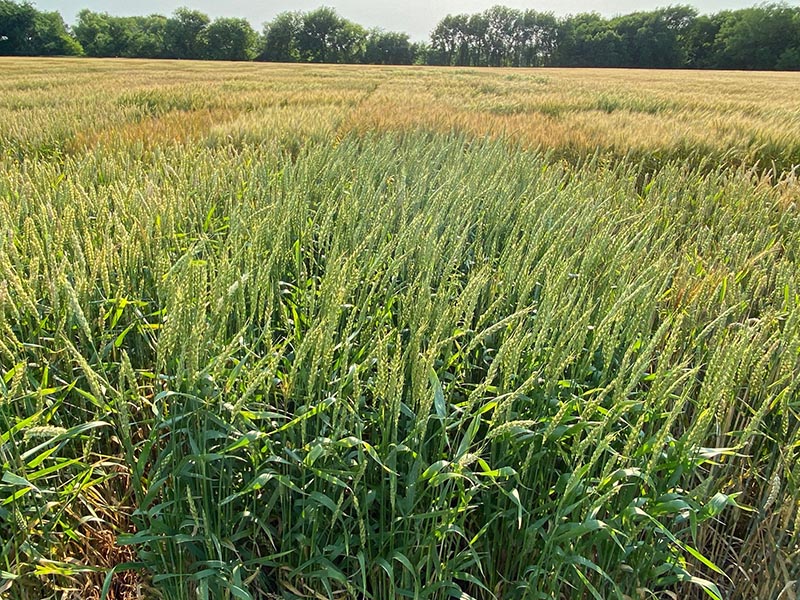
Image 2a. Yield-plot images of OK21PS821 at Morris on May 28, 2022.
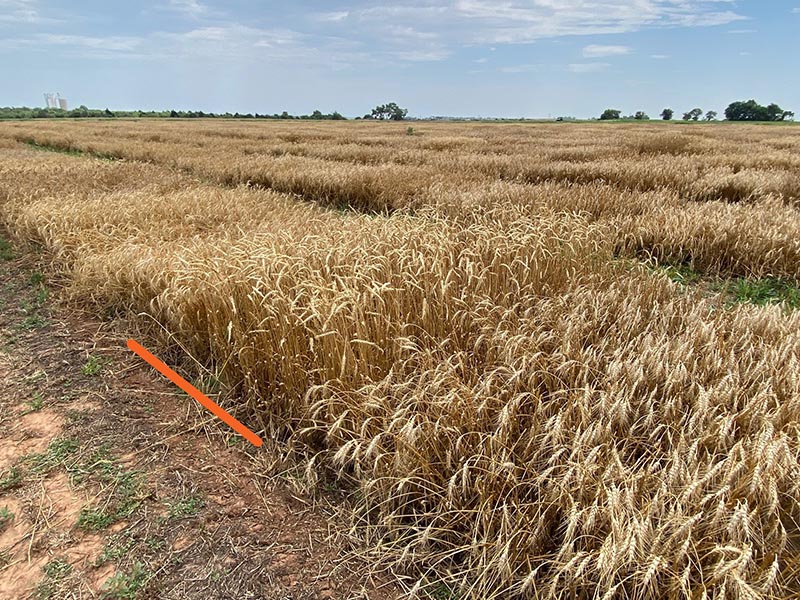
Image 2b. Yield-plot images of OK21PS821 at Lahoma on June 8, 2024, marked by an orange line.
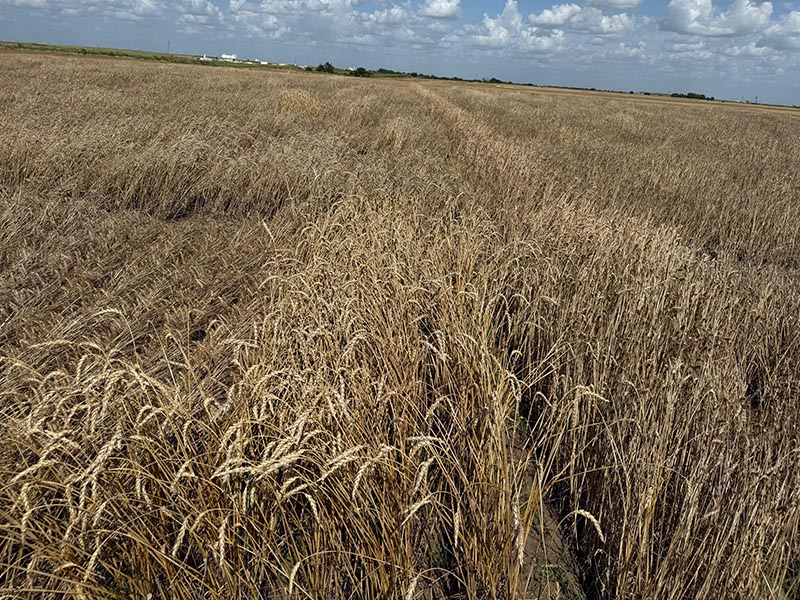
Image 2c. Yield-plot images of OK21PS821 at Alva on July 2, 2025, several weeks after harvest maturity and still standing well.
7. In the Distance
Several elite, advanced lines near the end of the OSU VDP are emerging as potential candidates for commercialization within the next one to three years. All are HRW and represent some of our leading genetic backgrounds. It’s not too early to take this long-distance glance at OSU wheat genetics (Table 5). The first three lines listed in Table 4 are featured in the 2026 wheat variety trials for the first time.
| Name | Pedigree | Positioning | Foundation seed production |
|---|---|---|---|
| OK21320 | HV9W06-455/OK09405 reseln//Skydance | Central corridor | Year 1 |
| OK21DTR1722-62 | Green Hammer/OK12716W//OK11709W reseln | Statewide | To be determined |
| OK22P7002 | TX09D1172/OK10130//Smith's Gold | Western OK | To be determined |
| OK21DTR1712-109 | Green Hammer/OK12D22004-016//OCW05S616T-2 | Statewide, dual-purpose | To be determined |
| OK236A47 | F07115G1INC1/OK13P016 | Statewide | To be determined |
OK21320 showed stellar downstate performance in the high-disease pressure environments of 2021, 2024 and 2025. Though its height can be above average, so is its straw strength. OK21DTR1722-62 had the distinction of placing in the top yield group in all eight environments of the 2025 elite line breeding nursery. This performance was highlighted by a +15 bu/ac differential over Showdown at the dual-purpose site near Okarche. The only weakness of OK22P7002 may be straw strength, but its superiority under drought-stressed High Plains conditions makes this weakness less problematic.
OK21DTR1712-109 follows in the shadow of Green Hammer with high dual-purpose yield, high acid-soil tolerance, and good quality. This line pushed 130 bu/ac at Morris in 2023 while averaging >70 bu/ac throughout the central corridor of Oklahoma (Tipton to Lahoma). OK21DTR1712-109 demands further attention. Finally, OK236A47 represents another descendant of Eastern European genetics (remember OK20708) with superior statewide yielding ability and baking quality.
8. Long Shot but Worth a Shot
It can be argued that for wheat consumption to increase in the U.S., the starch composition of white flour must be altered to make it less readily digested. Rapid digestion of the primary form of wheat starch (amylopectin), with sudden spikes in blood glucose levels, are the primary driver of insulin resistance and type II diabetes. Gluten tolerance should take a back seat to this priority, because gluten is not the larger problem. Ask any consumer what first comes to mind about wheat-based foods, and their likely response will be that it is a source of “carbs” (carbohydrates). Diet-conscious consumers have for decades attempted to avoid carbs, often including wheat. Though most consumers may not realize it, a more diet-friendly carbohydrate-based food should contain more amylose and less amylopectin, the two kinds of starch present in many grain-based foods, including wheat.
Since 2012, one of the objectives of the OSU wheat breeding program has been to incorporate naturally occurring mutations for starch synthesis in the wheat endosperm to increase the amylose component of wheat starch, which can be a more resistant form of starch. The Wheat Improvement Team has confirmed the presence of multiple starch synthesis mutations (one to three, depending on the genetic strain) through work conducted in Liuling Yan’s laboratory. However, we have not been able to equate those mutations with starch composition – until now.
Recent funding from the Oklahoma Wheat Research Foundation will allow this kind of analysis, which will unleash the phenotyping needed to move this selection program forward. This work will be conducted in early 2026 in cooperation with OSU’s Food and Agricultural Products Center. Thanks go to OWRF and the support of the Oklahoma Wheat Commission for taking this step. Be sure to ask about Nursery 83 in the field in 2026 where these unique genetic stocks are housed and field-tested (and soon to be assayed for starch composition).
The next stage in this research has already begun by combining two genetic mechanisms to increase amylose concentration in the event that a triple mutant for one mechanism is insufficient. Caution must be exercised in focusing entirely on amylose, because marked changes in baking quality (due to starch gelatinization differences) and field performance are expected.
9. Breeding Wheat with a Softer Touch
Soft red winter (SRW) wheat is commonly used as a source of disease resistance, acid soil tolerance and high yield potential to breed HRW wheat intended for the Wheat Improvement Team’s GrazenGrain® pipeline. Expanding our focus and considering Mexico and Central American countries as our primary export customers, a SRW type with 12% wheat protein (or higher), good mixing tolerance, and acceptable to near-acceptable bread baking quality would have merit in the sweet bread market. This crossover in SRW wheat functionality seemingly fits where HRW wheat is blended with SRW wheat to add gluten strength and body to certain food products, but in this instance, conventional SRW wheat would be blended with OSU’s crossover SRW wheat. Further applications of crossover SRW wheat may exist in the vital wheat gluten manufacturing sector and the growing “plant protein isolate” market under the premise that the stronger gluten of these crossover types may be more amenable to gluten extraction or purification in soft endosperm.
Moreover, Mexico and other Latin American buyers require conventional soft wheat to support their expansive cookie and cracker production capabilities. The proximity of Oklahoma HRW wheat to Mexico and the possibility of producing soft wheat either in conventional or crossover forms in the same geographic area as HRW wheat, behooves this breeding program to develop adapted and value-driven SRW varieties.
Unfortunately, some WIT soft wheat lines may produce excessive starch damage during milling – likely due to the heightened proportion of HRW parentage in those lines – which in turn leads to higher water absorption with negative consequences to dough stickiness and handling, texture, cracking and the diameter of cookies. This pitfall is currently being examined after adopting a new series of flour tests in the OSU wheat quality laboratory under the banner of solvent retention capacity assays.
Conventional soft and crossover soft red and soft white lines developed by the team were tested in the OSU Wheat Variety Trials for the first time at Miami in 2025. Leading the Miami trial in grain yield was the conventional soft white line OK2189178WF (2*OK12621/WA8183). The conventional SRW line OK21424F (25R56/OK12621) placed in the top yield group with OK2189178WF. One or both OSU experimental lines will be proposed for release in 2026, pending the establishment of a commercialization agreement with Corteva for the SRW line OK21424F. Crossover SRW lines, such as OK20056CF-10C24 (a SRW version of Strad CL Plus), will continue to be tested by the Wheat Marketing Center in Portland, Oregon, and by the national food supply chain consultant Farm Strategy for optimal deployment of this novel germplasm.
10. Healthy Breeds for Healthy Needs
The experimental line OK21DTR1720-92-15C23, also known as P92, contains a purple pigmented bran coat, courtesy of purple pericarp genes found in wild relatives of common wheat. Its agronomic fitness matches well across Oklahoma due to the presence of Smith’s Gold and Big Country in 75% of its pedigree.
Test marketing was conducted in the first half of 2025 with experimental quantities of grain. Commercial release is pending approval by OSU Ag Research later in 2025 or early 2026.
Current Oklahoma Wheat Research Foundation funding supports graduate student research into trait inheritance and stability of purple pericarp lines and other genetic stocks carrying a different pigmentation gene that confers blue aleurone. The concentration of anthocyanins in P92 is three times the level found in Smith’s Gold HRW wheat. These phenolic compounds are similar to those found in other blue, purple and black pigmented fruits and vegetables, and are known to support human health through their antioxidant activity.
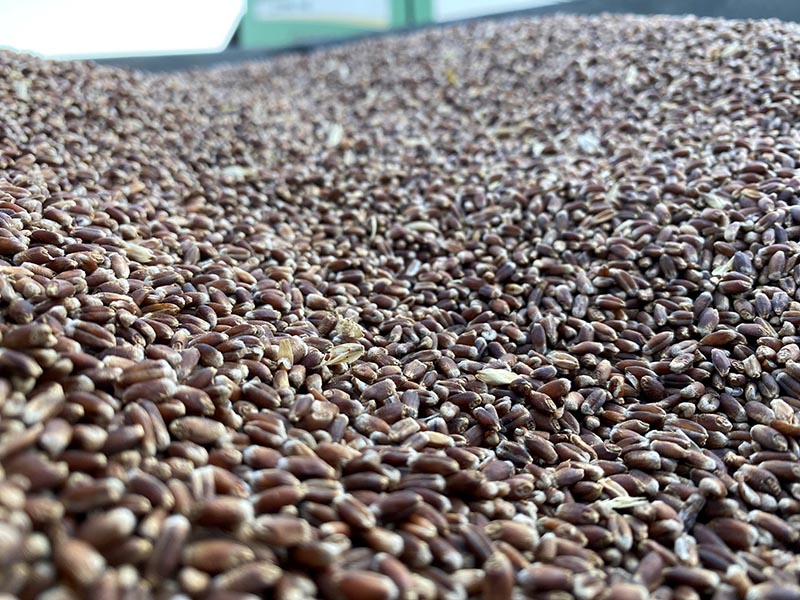
Image 3a. Foundation seed OK21DTR1720-92-15C23 produced at Chickasha straight off the combine on June 19, 2025.
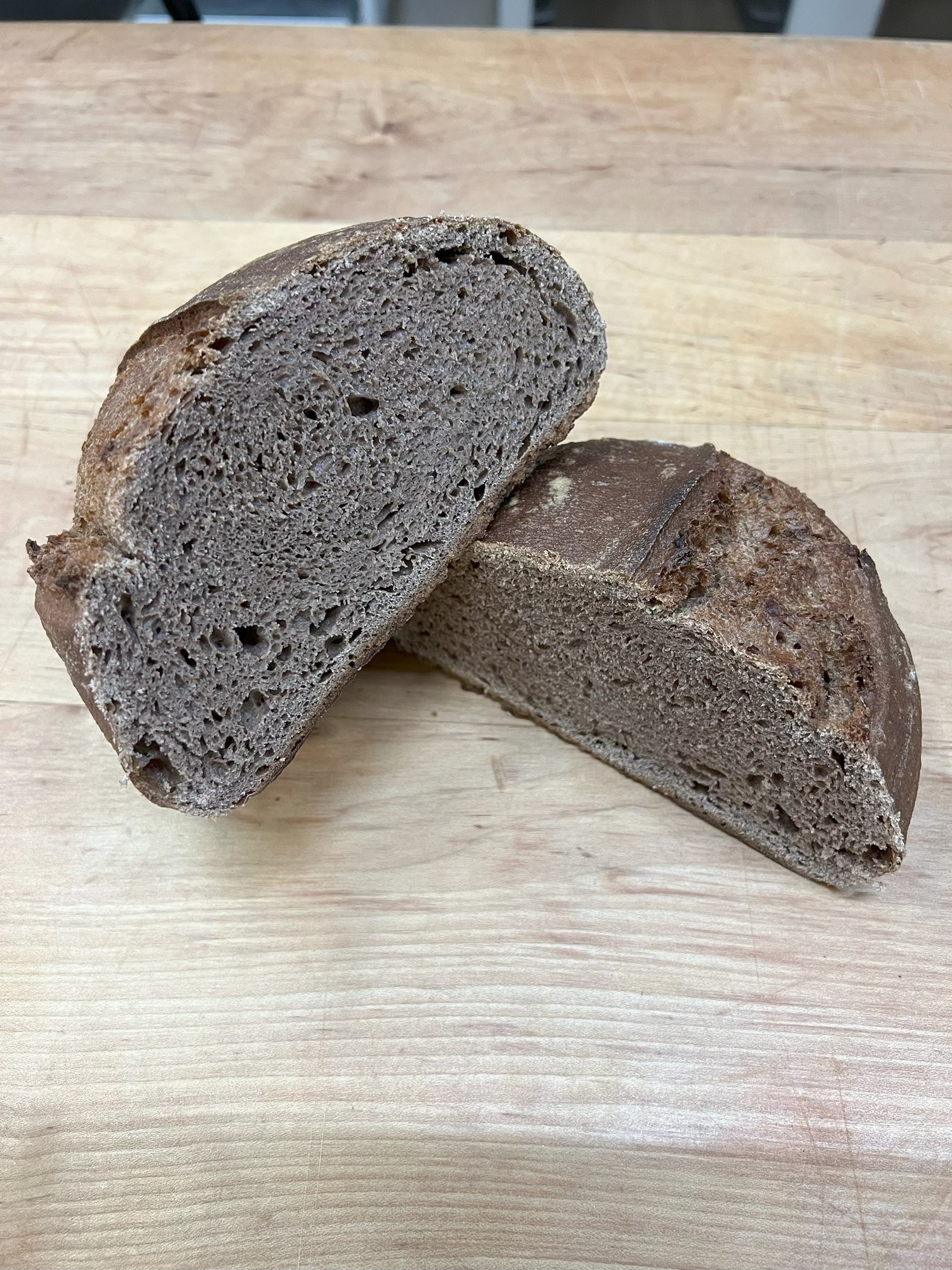
Image 3b. Experimental test bake of 100% whole wheat flour milled from OK21DTR1720-92-15C23, courtesy of Barton Springs Mill in Dripping Springs, Texas.