

Closing the AI divide: Finding a path forward for rural hospitals
Monday, June 15, 2026
Media Contact: Alisa Gore | Office of Communications & Marketing, OSU Agriculture | 405-744-7115 | alisa.gore@okstate.edu
AI – no matter what industry one works in, it’s an acronym that’s heard a lot nowadays.
The use of artificial intelligence has surged in recent years, increasing from roughly half of organizations using it in 2023 to more than 70% in 2024, according to global management consulting firm McKinsey & Company.
In healthcare alone, physician adoption nearly doubled from 38% in 2023 to 66% in 2024, according to the American Medical Association, and most United States hospitals now report using AI tools in at least some capacity. However, a 2025 study from the University of Minnesota found that rural hospitals lag in AI use.
“We studied the data set to focus more extensively on the rural side,” said Brian Whitacre, professor and Jean & Patsy Neustadt chair in the Oklahoma State University Department of Agricultural Economics, whose research area focuses on strengthening the economy in rural Oklahoma.
Bridging the AI gap in rural hospitals
Whitacre said his research team looked at the specific questions that were asked about AI use, such as: Are you using it to facilitate scheduling? Recommend treatments? Monitor health? Simplify billing? For each question, his team looked at whether urban or rural use was higher.
“The interesting thing is this is the first year that AI use was ever surveyed, so we don't have any trend data,” Whitacre said. “We know that use is lower in rural hospitals — only about half of rural hospitals use it, compared to over 80% of urban facilities. We're interested in the factors that impact AI adoption and the specific ways rural hospitals are using AI. We also want to explore how AI use is affecting their finances.”
Whitacre said he hopes to interview administrators at rural hospitals to discover whether they use AI. If they are not, why? If they are, what are they using it for?
“It may not necessarily be a good thing for a lot of small communities. Hospitals are typically an important source of employment in many rural communities, and there is a concern that Al will reduce staffing,” Whitacre said. “But if it helps the bottom line financially, that’s something we’re interested in too. Our research couldn’t get this type of detail, because the data only provides a snapshot of whether they use it or not.”
Whitacre said he is interested in turning this into a longer-term study to examine whether AI improves a rural hospital’s efficiency and bottom line after one year, two years, three years, etc. But for now, he is focused on how and why hospitals adopt it.
“Our preliminary results suggest that several factors influence AI adoption. If a rural hospital is part of a larger hospital system, that seems to positively influence AI adoption,” Whitacre said. “If your hospital is doing well financially, that increases the likelihood of adoption. Alternatively, if you’re an independent, small facility or are not doing as well financially, then you’re much less likely to adopt it.”
Real-world AI solutions: Mercy-Ada’s approach
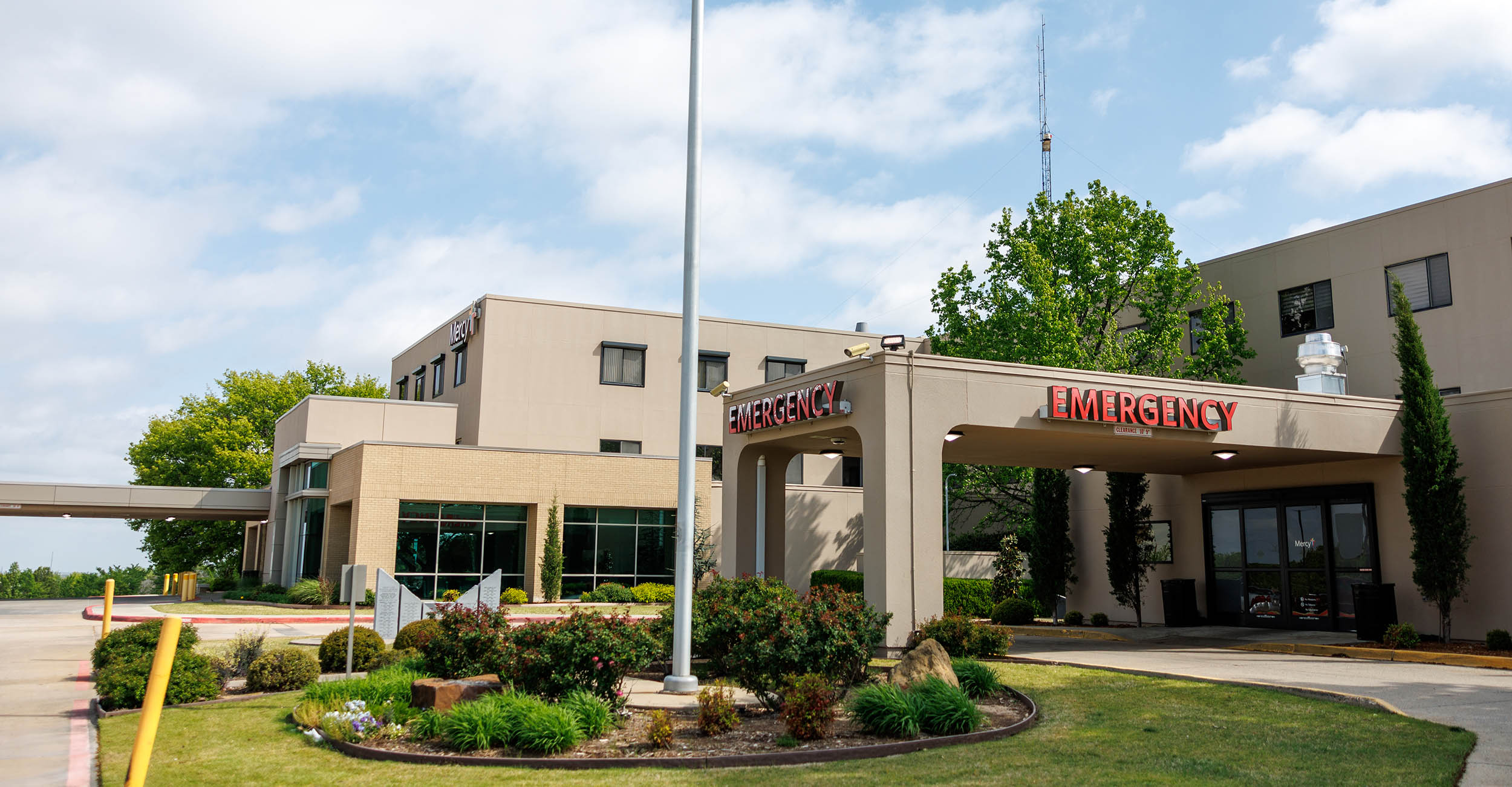
Mercy Hospital in Ada is a rural hospital operating under a larger system.
“As part of the Mercy Healthcare System, we are able to leverage resources that maybe an independent rural hospital would not have,” said Dr. Benjamin Lynch, chief medical officer of the Mercy-Ada. “That’s the benefit of being part of a larger healthcare system is we can extend those services that we may not otherwise have been able to tap into.”
Lynch said Mercy works with data scientists and healthcare professionals to vet every aspect of AI before implementation, during implementation, and for monitoring after implementation.
“We try to advance this forward in a way that is ultimately going to touch the patients that enter our doors — whether it’s in primary care, the hospital or advanced health care,” Lynch said. “We want to be proactive in getting a diagnosis quicker, getting patients to care quicker, getting patients more specific care and getting that care in the right channels.”
The Ada hospital uses AI to compile and share patient information more efficiently, to suggest possible diagnoses, to analyze CT scans and X-rays to detect urgent issues and to record patient information. The hospital is also developing AI for early detection of conditions, such as diabetes, cancer and other chronic diseases.
“Overall, the goal of AI at Ada Hospital is not automation of care decisions, but improving efficiency, speed and quality of care while keeping clinicians in control,” Lynch said. “The Mercy system is trying to get to a point where we are consolidating all of a patient’s healthcare history into a CliffsNotes version for providers who are having their first meeting with the patient.”
In a recent research paper currently under peer review, Whitacre called for investing in helping rural hospitals that lack the funds to evaluate and integrate AI.
“Without targeted support, rural hospitals risk falling further behind in adopting and using AI,” Whitacre said. “The new Rural Health Transformation Program is promoting AI use in rural healthcare, but there are no guidelines in place in terms of what you should be using it for or how you evaluate it. Hospitals with limited resources could use help understanding how AI use should look for them, and how they can ensure the technology is appropriate for their patients.”
Rural Oklahoma hospital officials interested in collaborating on this research can reach Brian Whitacre at brian.whitacre@okstate.edu or 405-744-9825.